Product Strategy · 8 min
Published November 3, 2026 · Last updated November 3, 2026
By the mia team
Opportunity Intelligence Software for Product Teams
How mia unifies customer, competitor, and market signals for healthcare and technology product teams making evidence-backed roadmap and risk-aware growth decisions.

The short answer: connect evidence before committing the roadmap
Opportunity intelligence software helps product teams evaluate what to build next by connecting customer needs, competitor activity, and market changes. mia brings those signals into one decision intelligence layer, turning fragmented evidence into ranked, source-cited recommendations. For mid-market and enterprise product leaders, the value is a clearer basis for roadmap planning, not another dashboard or an automatic commitment to a feature.
Healthcare and technology teams face different constraints, but the same planning question: which opportunity deserves investment, and what could make that decision wrong? This guide explains how to evaluate mia for that workflow. The sector examples below are illustrative planning exercises, not customer case studies or measured results.
What is opportunity intelligence software for product teams?
Here, opportunity intelligence means gathering and interpreting evidence to identify product opportunities, assess their relevance, and decide what to investigate or prioritize. It combines market and customer insights with competitive intelligence so product strategy reflects more than the loudest request or the latest competitor announcement. The term is not a standardized software category, and it is different from managing sales opportunities in a CRM.
A roadmap communicates priorities and direction. An intelligence layer improves the reasoning behind them. Atlassian's product roadmap guidance describes a shared strategic plan that responds to customer feedback and competitive changes. The practical implication is to connect evidence to a product goal before turning it into a delivery commitment.
How mia connects customer, competitor, and market signals
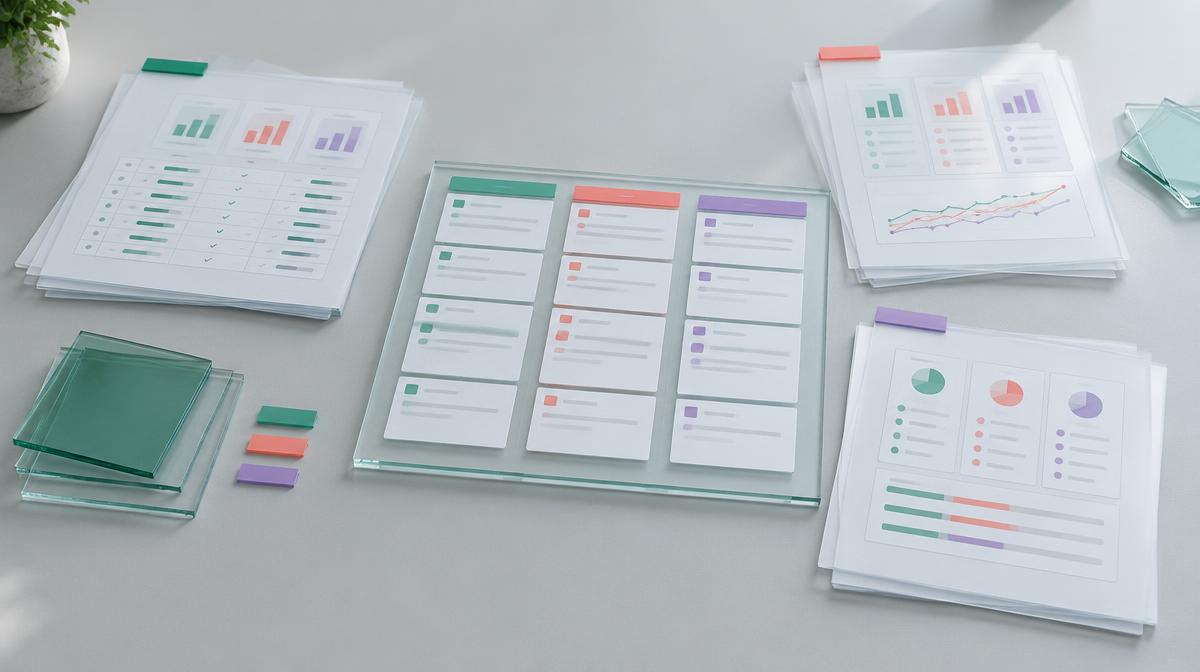
mia's product-team workflow brings together reviews, support tickets, sales calls, and in-app feedback with competitor moves and market signals. It synthesizes the inputs into themes and opportunities, describes ranking by sentiment, frequency, and revenue impact, and attaches sources so reviewers can inspect the reasoning. These are mia's published product capabilities, not independent benchmark findings.
| Evidence | Question it helps answer | What to verify |
|---|---|---|
| Customer signals | Which problem is recurring, and for which segment? | Representativeness, source context, and whether several mentions describe the same underlying issue. |
| Competitor signals | Has an alternative changed the customer's expectations? | Original announcement, availability, target segment, and whether the change actually addresses demand. |
| Market signals | Is the opportunity timely and strategically relevant? | Source date, geographic scope, and assumptions about adoption or regulation. |
mia describes routing themes, opportunities, and decisions into Jira, Linear, Notion, and Slack. Validate the exact connector and handoff in your configuration. The goal is to preserve the evidence as work moves into planning, rather than ask teams to abandon their existing roadmap tool. A source-cited recommendation remains a proposal for human review, not proof that the investment will succeed.
Healthcare product strategy: opportunity with a risk boundary
Consider a healthcare software team deciding whether to improve administrative onboarding or expand a reporting feature. Permitted, non-patient feedback from customer administrators can reveal workflow friction. Public competitor documentation can clarify alternative approaches. Market research can help the team frame procurement needs. Together, these inputs can support a commercial product hypothesis without turning patient records into planning material.
The team should document the problem, affected segment, evidence gaps, and conditions that would invalidate the opportunity. If the proposed product function involves health data or clinical decisions, privacy, clinical, and regulatory specialists must assess the implications separately. GDPR Article 9 treats health data as a special category of personal data, while Article 25 addresses data protection by design and default. Those considerations belong early in planning, not after a feature has been prioritized.
The FDA's clinical decision-support FAQs also explain that regulatory treatment depends on a software function and the applicable criteria. A market opportunity does not establish clinical safety or permission to deploy. This article does not claim that mia is a clinical decision-support tool, has healthcare-specific certification, connects to EHR systems, or is approved to process patient data. Confirm permitted data, deployment requirements, and contractual scope before connecting any sensitive source.
Technology roadmap planning: distinguish demand from noise
Consider an enterprise technology team choosing between a new analytics feature and an onboarding improvement. Support conversations suggest setup friction. Sales calls identify a similar concern among target accounts. A competitor has announced easier deployment. That convergence is a reason to investigate onboarding, not a reason to copy the competitor or promise an immediate release.
Use mia to review the connected signals and the evidence behind a recommended move. Then test whether the problem affects the intended customer segment, whether existing work already addresses it, and what engineering effort or dependencies change the trade-off. Revenue impact in a recommendation is an input to review, not a guaranteed financial outcome. Product leaders still own discovery, prioritization, and delivery decisions.
A risk-aware decision brief for cross-functional teams
Cross-functional growth teams, meaning product, marketing, sales, and business development working toward shared growth outcomes, need a common explanation of the opportunity. Give them a short decision brief with sources rather than a conclusion stripped of context.
- Decision: name the problem, target segment, and product goal.
- Evidence: attach original customer, competitor, and market sources with dates and scope.
- Alternatives: record what you could do instead, including postponing the investment.
- Uncertainty: distinguish observed facts from assumptions and missing evidence.
- Risk management: identify privacy, regulatory, commercial, and delivery questions that need specialist review.
- Ownership: name the decision owner, next validation step, and trigger for revisiting the recommendation.
How enterprise and mid-market leaders should evaluate mia
Bring one recurring roadmap decision to a demo. Use permitted evidence from your own workflow, or sanitized samples approved for evaluation. Ask mia to show the path from inputs to a ranked recommendation, then open the underlying sources and inspect how the decision reaches your planning system.
- Source coverage: are the specific customer and external sources you need supported?
- Traceability: can a reviewer inspect the evidence behind each material claim?
- Decision quality: does the recommendation identify a useful next move, and can you challenge the assumptions?
- Workflow fit: can the decision owner carry the context into the tools the team actually uses?
- Governance: verify permissions, identity controls, retention, AI data use, residency, and deployment options for your configuration.
- Pilot measurement: compare time spent assembling a decision brief and the proportion of recommendations with reviewable sources against your current workflow. Do not assume an improvement before measuring it.
mia publishes security and deployment information for procurement review. Evaluate it against your organization's requirements rather than treating a general security description as healthcare approval or a substitute for due diligence.
Frequently asked questions
Does opportunity intelligence software replace a roadmap tool?
Not necessarily. mia supports the evidence and recommendations that inform roadmap planning. Your planning tool can remain the place where priorities, dependencies, and delivery plans are maintained. Validate the handoff instead of assuming one system replaces the other.
How does it differ from competitive intelligence?
Competitive intelligence examines competitor behavior and positioning. Product opportunity intelligence also brings in customer needs and market context to decide which opportunities merit investigation or investment. Competitor evidence is one input, not the whole decision.
Can healthcare product teams use mia for clinical decisions?
This article positions mia for business and product planning, not clinical decisions. It does not establish clinical suitability or permission to process patient data. Healthcare buyers must separately validate their intended use, allowed sources, privacy obligations, and regulatory requirements.
Will mia make roadmap decisions automatically?
mia provides ranked, source-cited recommendations. Product leaders and relevant reviewers remain responsible for validating evidence, weighing constraints, and deciding what to commit to the roadmap.
Next step: evaluate mia on one real product opportunity
Choose a product question that repeatedly stalls because evidence is scattered. Bring the permitted sources, your planning constraints, and the decision owner. The useful test is whether mia helps your team explain a next move with evidence and a clear account of the remaining risk.