Strategy · 7 min · April 15, 2026
Why fragmented signals are the biggest blocker to better decisions
The challenge today is rarely access to information. It is that the signals live in silos. Here is how to connect them into a usable intelligence layer.
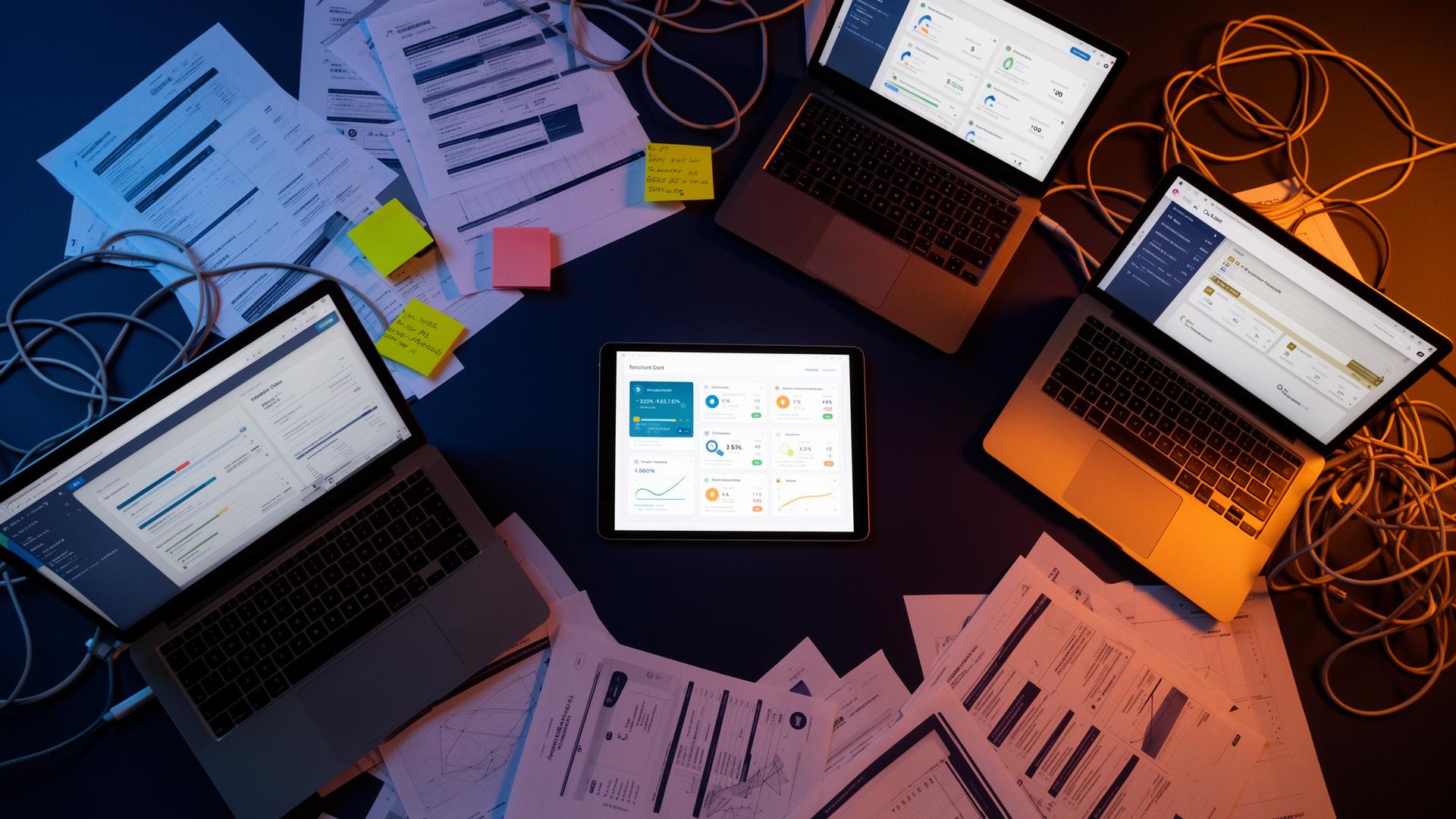
Customer feedback in one tool. Competitor activity in another. Market reports on a shared drive. Internal knowledge in heads. Every revenue team has the data. Almost none have it connected.
The cost of fragmentation is not the data itself. It is the meetings that exist only to reconcile what different teams already saw separately, the decisions that get delayed because no single view of reality exists, and the customers who notice that the company forgets things between conversations.
Why integrations alone do not solve it
Most teams attack fragmentation by adding integrations. Pipe everything into a warehouse, build dashboards, declare victory. The dashboards then become a new silo: the place where data goes to be ignored by everyone who is not on the data team.
The missing layer is interpretation. Raw events do not change behavior. Decisions change behavior. An intelligence layer sits between the data and the decision, and that is the part most stacks are missing.
What an intelligence layer actually does
- Collects signals from every relevant source, internal and external.
- Organizes by the decision the signal supports, not by the system it came from.
- Routes outputs into where the team already works, not into a new app.
- Tracks which signals changed which decisions, so the loop improves over time.
Designing it the right way around
The instinct is to start with the data. The discipline is to start with the decision. List the ten decisions your team makes most often. For each one, write the two or three signals that would change the call. Only then go looking for the sources.
Working backwards from decisions makes the system small enough to actually build, and useful enough that people will trust it on day one.
The first 30 days
Pick one recurring decision, instrument it end to end, ship the loop, then add the next decision. Two decisions in a quarter beats a 12-month platform project that nobody ends up using.