GTM · 8 min · April 28, 2026
Battlecards that actually win deals
What separates a battlecard reps use from one that lives in a forgotten doc. Real structure, real examples, and a template you can copy.
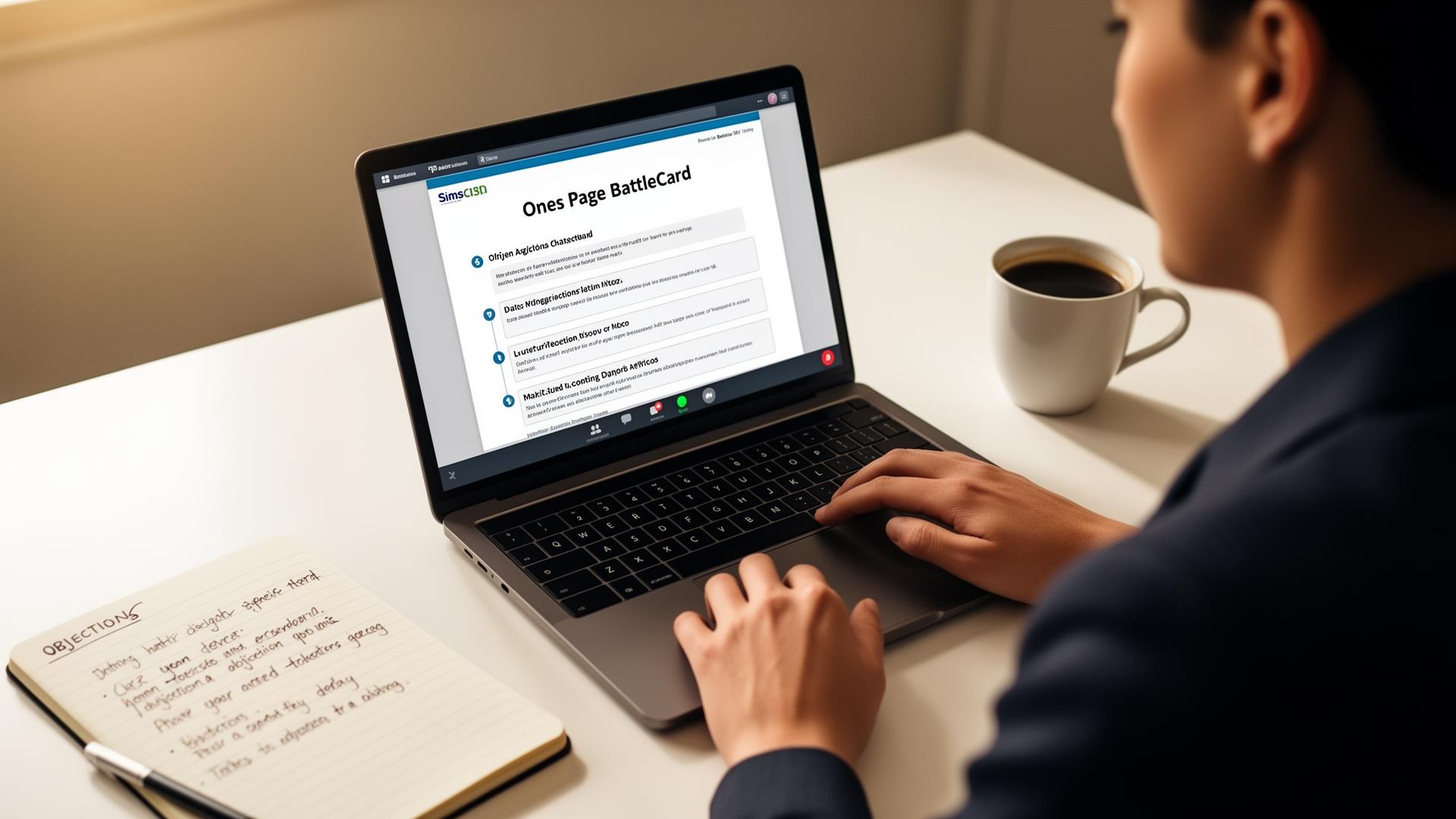
Most battlecards fail in the same way: they read like research reports. Reps on a live call do not have time to scroll through a five-page document looking for the answer to an objection that was raised 20 seconds ago. They need three things, fast.
- A one-line position that frames the competitor on your terms.
- The top objection-handler, in the language a real prospect uses.
- A trap question that puts the competitor on the back foot.
Strip every battlecard down to those three. Everything else goes in an appendix the rep can read after the call.
The anatomy of a battlecard that gets used
Above the fold
The first screen must answer: how do we win this deal? Not what is their valuation, what is their feature list, what is their funding history. Save that for the appendix.
The objection handlers
Limit it to the top three. Each one needs the objection as the prospect actually phrases it, a one-line acknowledgment that does not dismiss it, and a reframe that moves the conversation toward a strength of yours. If you cannot reframe an objection honestly, do not put it on the card. Train reps to say I do not know.
The trap questions
Trap questions are questions you can ask that the competitor cannot answer well. They work because they shift the rep from defending to leading. A good trap question is specific, neutral in tone, and based on a real product limitation the competitor has documented somewhere public.
Keeping battlecards alive
A battlecard goes stale the moment a competitor moves. Refresh the position monthly using real win/loss signals, not internal opinion. The two questions that drive the refresh: what objection did we hear this month that the card did not cover, and which line on the card did reps actually use? Cut anything that no rep cited in 90 days.
Distribution beats authorship
The best battlecard in the world is worthless if reps cannot find it on a call. Surface it inside the CRM at the deal record, not in a wiki nobody opens. Better still, surface it inside the meeting tool during the call itself. The rule is simple: a battlecard is only useful if it changes what the rep says in the next 90 seconds.